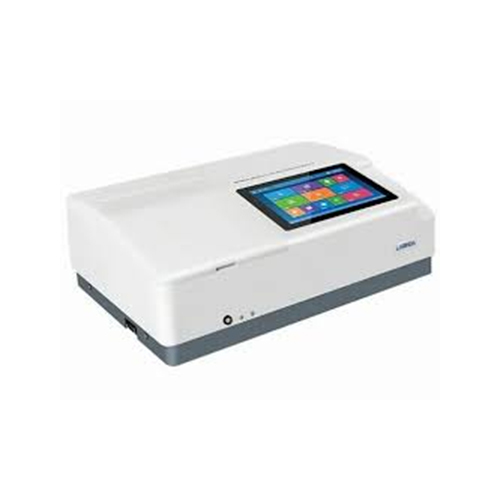
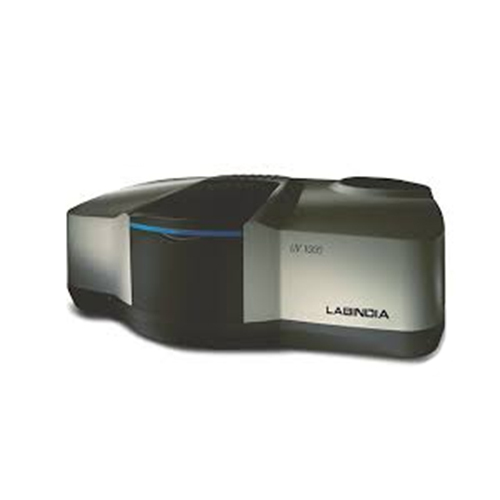
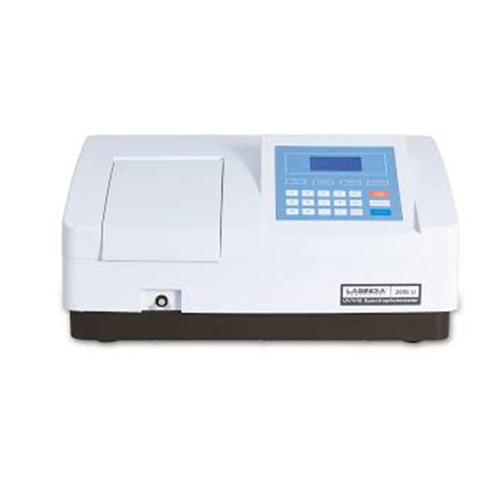
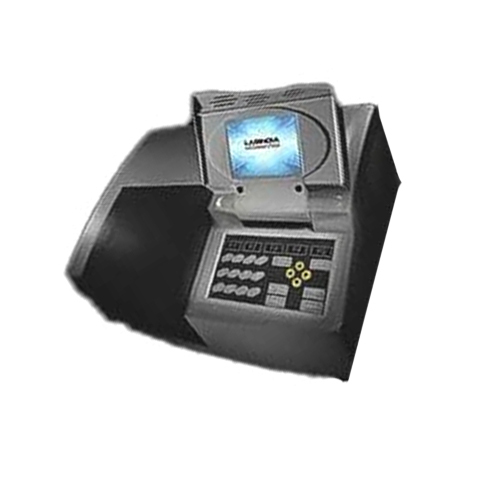
About Dual Beam UV-VIS 2002 XE Spectrophotometer
Standard Features of Dual Beam UV-VIS 2002XE Spectrophotometer (XENON LAMP):
- Photometry Measurement Measure absorbance and transmission at any defined wavelength.
- Multi-Wavelength Measurement Measure absorbance and transmission at multiple wavelengths and analyze the results by built-in methods.
- Time Scanning Determine absorbance at any time interval and defined wavelength.
- Kinetics Determine absorbance at any time interval and defined wavelength. It can be used to monitor real-time enzyme reactions and calculate enzyme activity according to the results. The reaction rates of samples can be calculated by setting the interval time.
- Quantitation By measuring reference samples and establishing a standard curve, determine unknown samples. Supports built-in and customized formulations to establish standard curves.
- DNA/Protein Determination According to the sample type, choose the suitable method to determine DNA, RNA, and Protein concentration.
- Wavelength Scanning Determine full wavelength absorbance and transmission at defined wavelength intervals, generate and analyze the graph by built-in methods.
- Customized Methods Users can adjust the calculation methods according to their own requirements and use them in corresponding determining modules
Precise and Reliable Spectral MeasurementsBenefit from high wavelength accuracy (0.3 nm) and repeatability (0.1 nm) for dependable results across the UV and visible spectrum. The dual beam design and xenon flash lamp provide excellent baseline flatness and stability, ensuring that even low-concentration samples can be measured with confidence. Quantitative and qualitative analyses are simplified with comprehensive operation modes and advanced software integration.
Versatile Applications and Efficient OperationThe UV-VIS 2002 XE is engineered for analytical laboratories engaged in substance identification, concentration measurement, or kinetic studies. Its capacity for multiple cuvettes and semi-automatic operation streamlines workflow, while a wide temperature range (room temperature to 50C with an optional holder) expands its versatility. Real-time data transfer and output options hasten reporting and record-keeping.
FAQ's of Dual Beam UV-VIS 2002 XE Spectrophotometer:
Q: How does the Dual Beam UV-VIS 2002 XE Spectrophotometer achieve high measurement accuracy?
A: This instrument employs a dual beam setup combined with a high-stability xenon flash lamp and holographic grating. These core components, alongside silicon photodiode detectors, ensure wavelength accuracy of 0.3 nm and tight photometric repeatability, leading to reliable absorption readings.
Q: What types of analyses can be performed with this spectrophotometer?
A: The UV-VIS 2002 XE supports diverse applications including quantitative and qualitative analysis, spectrum scanning, multi- and single-wavelength measurements, and kinetics studies, making it suitable for various analytical laboratory tasks.
Q: When should I use the spectrum scanning mode?
A: Spectrum scanning mode is best used when you need to obtain the absorbance or transmittance values across a continuous range of wavelengths, such as when identifying substances or characterizing sample spectra.
Q: Where is the data from measurements stored or exported?
A: Measurement data can be easily exported through USB, RS232, or the parallel printer ports provided. The instrument also features software integration for direct data transfer to laboratory information systems or external storage.
Q: What is the process for running a typical sample analysis?
A: To analyze a sample, first select your desired operation mode on the graphical LCD display. Insert up to four standard cuvettes in the compartment (2 ml - 5 ml), set the appropriate parameters, and begin measurement. Data is automatically processed and can be exported or printed.
Q: How is this spectrophotometer beneficial for modern analytical laboratories?
A: Its high accuracy, user-friendly interface, advanced connectivity, and ability to handle multiple samples simultaneously streamline lab work, improve reproducibility, and reduce manual errors, enabling higher throughput and consistent results.

 Send Inquiry



 Send Inquiry

 Send Inquiry
 English
 Spanish
 French
 German
 Italian
 Chinese (Simplified)
 Japanese
 Korean
 Arabic
 Portuguese