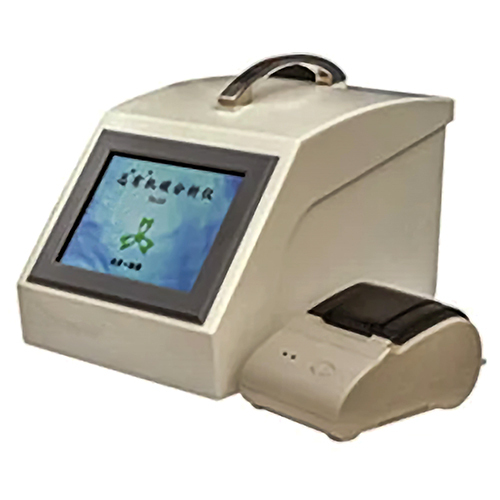
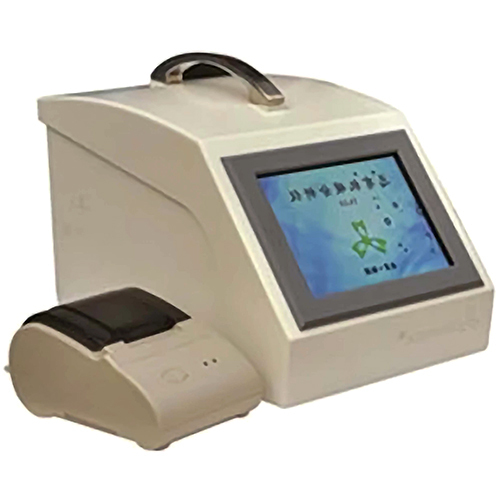
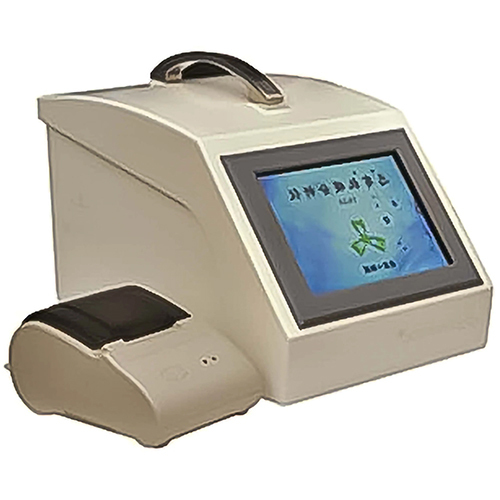
About TA -1.0 Toc Measurement Equipment
Operation Principle
Oxidation organism by UV lamp and convert organic stuff into carbon dioxide, which detection adopted by direct conductivity method. The total organic carbon is the difference of the total carbon (TC)concentration in samples tested after oxidation and not oxidation of the sample total inorganic carbon(TIC), namely: TOC = TC- (TIC).
Main feature
- No need of nitrogen, oxygen, acid reagent and oxidant, operation is simple;
- Equipped with automatic sampler, and the system suitability can be done automatically;
- Limit alarm design, and when the test sample exceeds the prescribed limit, the instrument makes automatic alarm;
- It is in conformity with the test scheme as specified in the new edition of state pharmacopoeia;
Application
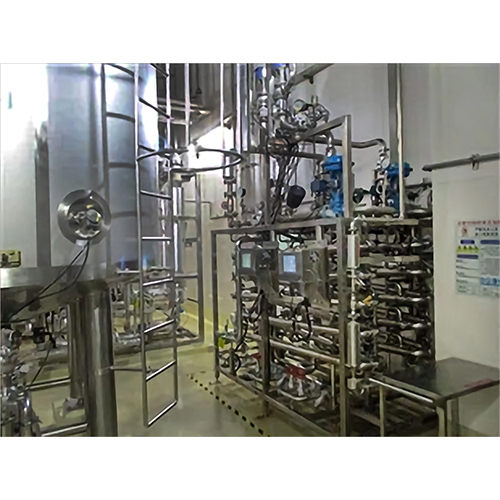
Laboratory testing of pharmaceutical water (purified water, injection water), and cleaning validation, electronic industry, food industry, etc.
Precise and Efficient TOC MeasurementThe TA -1.0 utilizes a high temperature catalytic combustion method, followed by NDIR detection, to guarantee accurate and stable TOC readings. Suited for a range of applications, it handles sample volumes between 50-2000 L and delivers results within three minutes. The instrument is fully automatic, reducing manual intervention and ensuring ease of use across laboratory, industrial, or environmental setups.
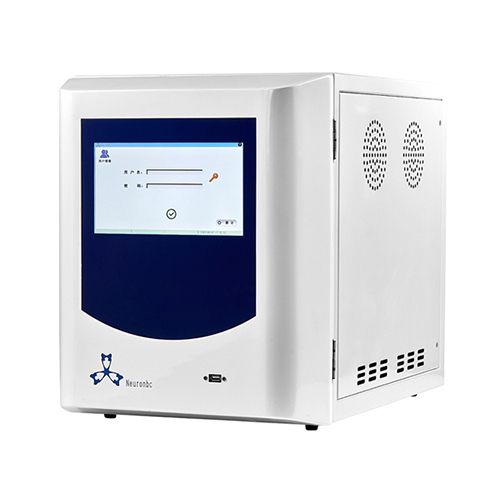
User-Friendly Data Handling and ControlDesigned for operator convenience, the equipment features a clear LCD digital display for real-time monitoring of results and operational status. Its data output supports both digital and graphical formats, with memory capacity for up to 10,000 records. The microprocessor-based control system, automatic calibration, and alarm functions further streamline analysis and ensure optimal reliability.
Compliance and Versatile ApplicationThe TA -1.0 complies with major international standards, including ISO 8245, EPA 415.1, and ASTM D2579, making it suitable for testing in regulatory, research, and industrial environments. Supporting a broad measurement range and high throughput, this equipment is ideal for laboratories, service providers, and manufacturers who demand accuracy, reliability, and efficiency in TOC analysis.
FAQ's of TA -1.0 Toc Measurement Equipment:
Q: How does the TA -1.0 TOC Measurement Equipment detect Total Organic Carbon (TOC) in samples?
A: The TA -1.0 utilizes high temperature catalytic combustion to oxidize organic carbon in liquid samples, which is then detected and quantified using a non-dispersive infrared (NDIR) detector. This process ensures sensitive and accurate TOC measurement across a range of concentrations.
Q: What applications is the TA -1.0 suitable for and where can it be used?
A: The equipment is designed for TOC analysis in laboratories, industrial facilities, and environmental monitoring stations. Typical uses include regulatory compliance, quality control, research, and waste water or process water analysis, making it a fit for laboratory, industrial, and field-based applications.
Q: What are the data management and output features of this TOC analyzer?
A: The TA -1.0 offers both digital and graphical data output on an LCD display and supports storage for up to 10,000 measurement records. It provides real-time monitoring, and data can be accessed via RS232 or USB interfaces, facilitating easy review, export, and backup.
Q: When is calibration required, and how is it performed?
A: The analyzer features multi-point auto-calibration, which is typically performed automatically at set intervals or when prompted by maintenance schedules. This ensures reliable and consistent measurements without the need for manual adjustments.
Q: What benefits does the low reagent consumption and optimized system provide?
A: Low reagent consumption not only reduces operational costs but also decreases downtime and maintenance frequency. The optimized system design enhances throughput without compromising accuracy, making it efficient for high-volume testing environments.
Q: How many samples can be tested at once, and what is the typical sample volume?
A: The TA -1.0 is configured to test one sample at a time in accordance with standard TOC analysis procedures. Sample injection volume is typically between 50-2000 L, which supports both concentrated and dilute liquid sample analysis as per standard methods.
Q: What safety and alert features are incorporated in the instrument?
A: The equipment provides automatic error and maintenance alerts through an integrated alarm system. These features help operators quickly identify issues related to gas pressure, reagent levels, maintenance needs, or system malfunctions, thereby improving operational safety and minimizing downtime.

 Send Inquiry



 Send Inquiry

 Send Inquiry
 English
 Spanish
 French
 German
 Italian
 Chinese (Simplified)
 Japanese
 Korean
 Arabic
 Portuguese