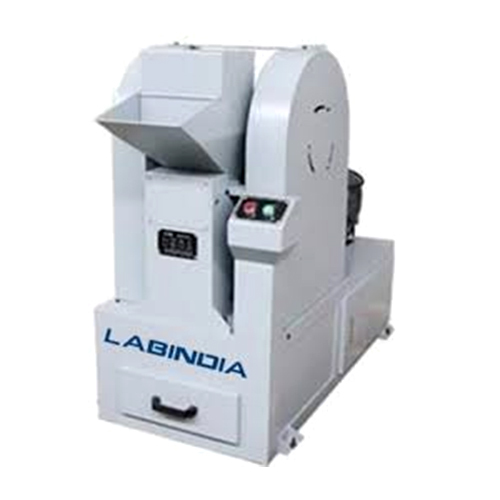
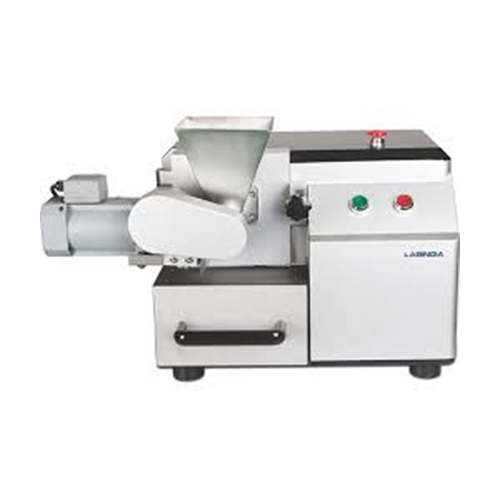
About JC 1000 Jaw Crusher
Application
- Jaw crushers are ideally suited for preliminary crushing of construction materials, ores, granite, oxide ceramics, quartz,
- slag, silicon, coal, tungsten alloys, cement clinker, etc
Standard Features of Jaw Crusher JC1000
- The finest media obtainable with a Jaw Crusher of a similar size
- Quicker and simpler adjustment of jaws
- More crushing - extra heavy-duty
- Less maintenance due to improved design of crushing components
- Various MOC Jaw plates with good wear resistance.
- Chrome Steel, Stainless Steel, Tungsten Carbide, Zirconia etc..
- For coarse primary crushing and mid-range primary crushing.
- No dust pollution, low working noise.
- High crushing efficiency,uniform output size,stable operation.
- The particle size is adjusted by the handle.
- No need for foundation fixation
Precision Crushing for Laboratories and MiningThe JC 1000 Jaw Crusher stands out for its accuracy and reliability. Designed for sample preparation and mineral processing, it supports a wide range of laboratory and industrial applications. The heavy-duty build ensures consistent operation under demanding conditions, while the adjustable discharge size maximizes flexibility for various testing needs.
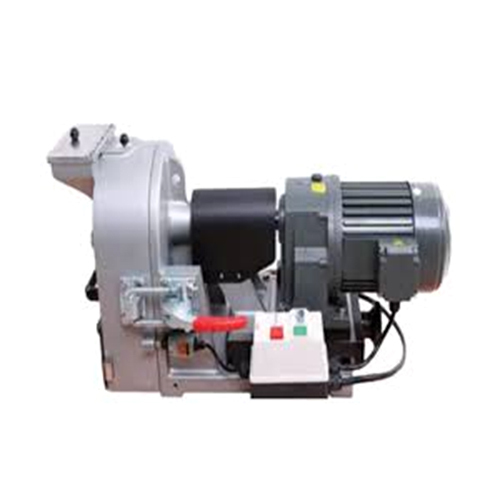
Durable and Low-Maintenance DesignEquipped with a manganese steel crushing chamber and constructed from mild steel, the JC 1000 resists wear and delivers long-lasting performance. Its belt-driven motor not only minimizes maintenance requirements but also operates quietly, keeping noise levels below 70 dB - suitable for laboratory environments.
Easy Operation and Reliable OutputFeaturing a straightforward analog display and semi-automatic controls, the JC 1000 Jaw Crusher combines user-friendly operation with high-precision output. Its stable performance ensures high efficiency in crushing and sample preparation, making it indispensable for quality control and research.
FAQ's of JC 1000 Jaw Crusher:
Q: How does the JC 1000 Jaw Crusher operate and what are its key functions?
A: The JC 1000 Jaw Crusher operates using a belt-driven electric motor that rotates the crushing jaw at 285 RPM. It is primarily used for sample preparation, rock and ore crushing, and mineral processing, making it suitable for laboratory, industrial, and mining applications.
Q: What materials are suitable for crushing with the JC 1000 Jaw Crusher?
A: This jaw crusher is engineered to handle feed materials up to 50 mm in size, including various rocks, ores, and minerals. Its manganese steel crushing chamber provides robust resistance to abrasion, ensuring efficient reduction to sizes between 6 and 18 mm.
Q: When is the JC 1000 Jaw Crusher most beneficial to use?
A: The JC 1000 excels in situations requiring high-precision sample preparation, particularly in laboratory analysis, quality assurance processes, and mineral evaluation. Its stable performance and heavy-duty design make it valuable for consistent, repeatable results.
Q: Where can the JC 1000 Jaw Crusher be installed or used?
A: Due to its compact dimensions (775 x 900 x 930 mm) and manageable noise level, the JC 1000 is well-suited for laboratory benches, pilot plants, and industrial spaces. Its durable construction makes it appropriate for a variety of environments including mining sites and research facilities.
Q: What is the process for adjusting the discharge size in the JC 1000?
A: The discharge size can be easily adjusted between 6 and 18 mm to accommodate different sample requirements. This adjustment is performed manually, ensuring precise control over final particle size and enhancing the crusher's versatility.
Q: What benefits does the JC 1000 Jaw Crusher offer to users?
A: Key benefits include high-precision crushing, easy operation, stable performance, quiet running (below 70 dB), and a heavy-duty, wear-resistant build. These features ensure reliable workflows, minimal disruption, and efficient sample throughput.
Q: How do I maintain and service the JC 1000 Jaw Crusher for optimal performance?
A: Routine maintenance involves regular inspection of jaw plates, belt tension, and motor function. As a semi-automatic unit with robust components, the JC 1000 requires minimal servicing but should be checked periodically by qualified personnel for peak performance.

 Send Inquiry



 Send Inquiry

 Send Inquiry
 English
 Spanish
 French
 German
 Italian
 Chinese (Simplified)
 Japanese
 Korean
 Arabic
 Portuguese